The short version
Key points
- Tank-style tracks provide traction across grass, dirt and sand, and allow the mower to turn on the spot.
- Two powered rotary blades can mulch and cut grass, but the motors may need to be set to maximum for thick grass.
- Cutting height can be adjusted from approximately 30 mm to 100 mm.
- The removable lithium iron phosphate battery is rated for nearly 2,500 square metres, with coverage of about 900 square metres per hour.
- AI vision can identify many larger obstacles, although very small objects such as a bouncy rubber ball may not be detected reliably enough to prevent damage.
A mower designed for difficult properties
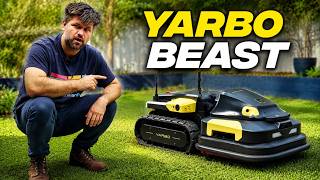
The Lymow One is positioned as a high-performance robotic mower for large, complex properties. Its most distinctive feature is the pair of tank-style tracks at the rear. These provide grip on grass, dirt and sand, and help the mower handle slopes, mounds and other uneven terrain.
The tracks can rotate the mower on the spot. This makes manoeuvring straightforward and, according to the overview, does not damage grass as much as might be expected, provided the mower is not repeatedly turned in the same location. The app also provides settings to alter how the mower turns.
Rotary mulching blades
Rather than using small razor-style blades, the Lymow One uses two powered rotary blades for cutting and mulching. The blades are described as strong and fast, allowing the mower to cut grass in a single pass and return the clippings to the lawn as mulch.
The blade motors can be set to low, standard or maximum power. During testing, thick grass could cause stoppages when using the lower settings, so maximum power was recommended for avoiding pauses. The mower is also described as less likely to clog with grass, although a stick forced into the cutting area could still cause a blockage.
Obstacle detection and safety
Cameras and other sensors at the front support an AI vision system that can recognise and avoid many obstacles, including tree branches, children’s toys and dog toys. The overview cautions that very small objects, such as a bouncy rubber ball, may not be detected and could be shredded by the blades.
The front bumper includes contact sensors that make the mower reverse after bumping into an object. Blade safety sensors are also designed to stop the steel blades in less than a second when the cutting area is breached. The cutting deck can lift over larger bumps, while the cutting height is adjustable from approximately 30 mm to 100 mm.
Battery, coverage and operation
The battery is removable, which is unusual among the robot mowers discussed in the overview. It is described as a high-density lithium iron phosphate battery intended to provide long service life. Claimed operating figures include nearly 2,500 square metres of coverage, around 900 square metres per hour and approximately two to two-and-a-half hours of mowing time, depending on yard complexity.
The Lymow One can return to its charger and then resume mowing, supporting a set-and-forget approach for large areas. It is waterproof, although the mulching action creates dust and debris, particularly in sandy conditions. The cameras may therefore need cleaning after dusty or muddy periods, and a cover or shade could help keep the mower cleaner.
App experience
Initial setup was described as acceptable rather than effortless. Once configured, the mower can be controlled by area, with settings for cutting height, speed and travel pattern, including zigzag or straight-line mowing.
The app is functional but not especially intuitive. Its many features may take time to learn, although the mower requires less attention once the areas and settings have been configured. A first-person-view mode is also available for manually driving the robot around the property.
TechManPat’s conclusion
In my view, the Lymow One is best suited to large acreage properties with hills, mounds, trees and other obstacles rather than small, simple suburban lawns. Its tracks and powerful mulching blades give it the capability of a ride-on mower while keeping the mowing automated. I would still treat the obstacle detection carefully around small toys and expect to spend time learning the app, but after two weeks I see strong potential for demanding properties. A longer review is needed for more detailed assessment.
This knowledge-centre summary is based on the linked TechManPat video and reflects the information available when it was published. Check current pricing, availability and policies before acting.